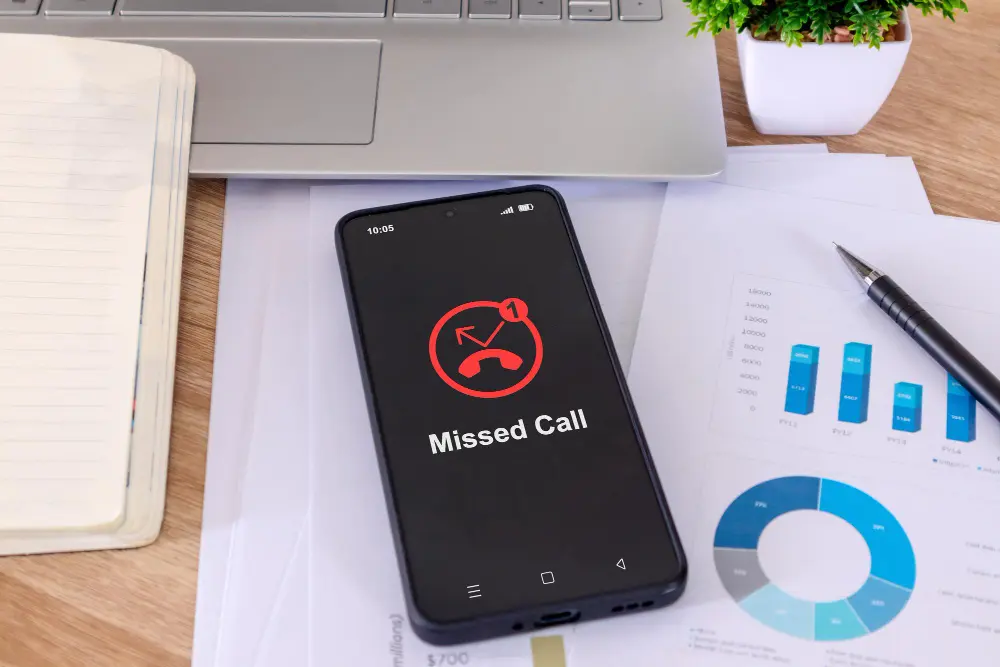

With a Cloud PBX, when the lights go out at your office, calls automatically reroute to your team's mobile apps. Your customers still get through.
If you've been looking at business phone systems recently, you've probably seen the term "Cloud PBX" thrown around. It sounds technical. It isn't. And once you understand what it actually means, it's hard to go back to the old way of doing things.
Here's everything you need to know — no jargon, no sales pitch, just a straight explanation.
First, what's a PBX?
PBX stands for Private Branch Exchange. It's just the system that manages phone calls inside a business — routing calls to the right extension, putting people on hold, transferring calls between colleagues, that sort of thing.
For decades, this was a physical box. A big, expensive piece of hardware that sat in your server room, needed a specialist to install it, and cost tens of thousands of rands before you'd even made a single call. If something broke, you called a technician and waited. If you needed to add a line, you called a technician and waited.
That was the only option. Until it wasn't.
What makes it "cloud"?
A Cloud PBX does everything a traditional PBX does — routing calls, managing extensions, running an auto-attendant — but the hardware lives in a data centre, not your office. You access it over the internet, just like you'd access Gmail or your banking app.
That shift changes almost everything about how your phone system works.
You don't buy hardware. You don't pay for installation. You don't need an IT person on call. You log in, set things up through a browser, and your phones work. Add a new staff member? Add an extension in two minutes. Moving offices? Your phone number and system come with you.
How it actually works (in plain terms)
When someone calls your business number, the call doesn't go to a physical device in your office — it goes to a server in the cloud. That server checks your settings (your business hours, your auto-attendant menu, your ring groups) and routes the call accordingly. It rings the right phone, whether that's a desk phone, a laptop, or a mobile app on your employee's cell phone.
The call travels over your internet connection using a technology called VoIP (Voice over Internet Protocol). As long as you have a decent internet connection — and most business fibre connections are more than sufficient — call quality is excellent.
Cloud PBX vs Traditional PBX: the real difference
Traditional PBX | Cloud PBX | |
|---|---|---|
Setup Cost | R20,000-R80,000+ | Minimal to none |
Monthly Cost | Line rental + Maintenance | Per-user subscription |
Setup Time | Weeks | 1 -2 days |
Hardware Required | Yes (extensive on-site) | Optional (can work 100% with apps) |
Scale up/down | Expensive/slow | Immediate |
Remote Work | Limited | Full Support |
Load Shedding Resilience | Falls with power | Not affected by Load Shedding |
Maintenance | Your Problem | Provider's Problem |
The cost comparison alone convinces most businesses. But for South African companies specifically, there's one row in that table that matters more than the rest.
Load shedding changes the calculation entirely
With a traditional phone system, load shedding means your phones go down. No UPS lasts forever, and most businesses aren't going to keep a generator running just to maintain their landlines.
With a Cloud PBX, your phone system lives in the cloud — on servers with enterprise-grade backup power. When the lights go out at your office, calls automatically reroute to your team's mobile apps. Your customers still get through. Your business still answers.
This isn't a nice-to-have in South Africa. It's a genuine operational requirement.
What features come with it?
A decent Cloud PBX isn't just about making calls. The features that used to cost extra with a traditional system are usually included:
Auto-attendant (IVR): "Press 1 for sales, press 2 for support..." — set it up yourself in minutes, no technician required.
Call recording: Automatically record calls for quality control or compliance. Stored in the cloud, accessible whenever you need them.
Ring groups: One number rings multiple phones simultaneously — useful for sales teams or reception.
Voicemail to email: Missed calls send a voice note directly to your inbox.
Call reporting: See who called, when, how long they waited, how many were missed. Actual data, not guesswork.
Mobile app: Your team can make and receive calls on their phones using the business number — even working from home, from the road, or from Cape Town while the rest of the team is in Joburg.
Who is it actually right for?
Cloud PBX works for almost any business, but it's particularly well-suited to:
SMEs with 5–50 staff who want a professional phone system without enterprise-level costs or complexity. You get the features of a large corporate system at a fraction of the price.
Businesses with remote or hybrid teams. If your people aren't all in one office, a traditional phone system just doesn't work. Cloud PBX was built for distributed teams.
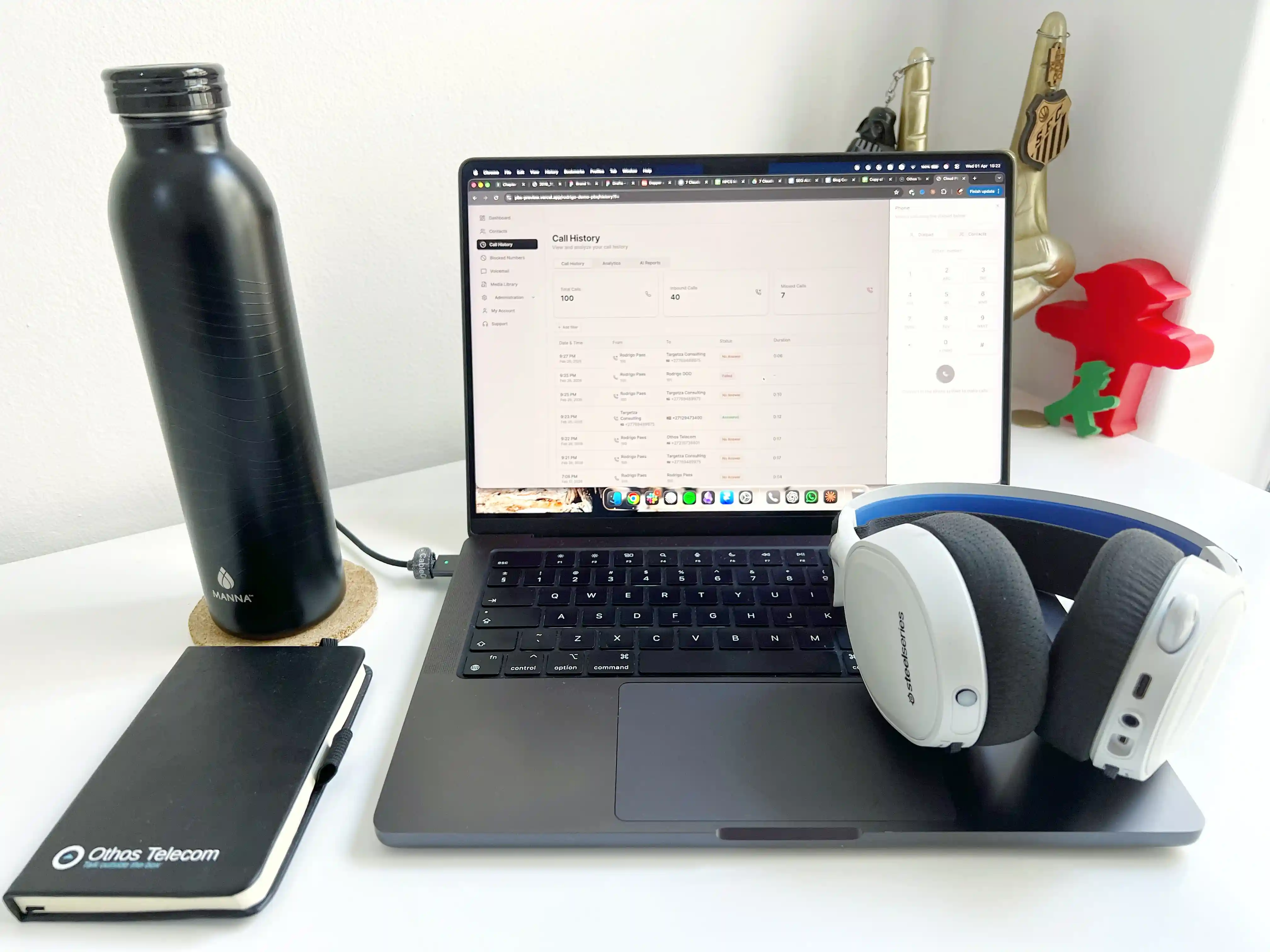
Here is my current setup when working from home:
Companies on Telkom landlines who are tired of the costs, the reliability issues, and the inflexibility. Switching to Cloud PBX typically cuts monthly phone bills significantly.
Growing businesses that need to add staff regularly. With a traditional system, every new hire means more hardware. With Cloud PBX, it's a few clicks.
What does it cost in South Africa?
Pricing varies by provider, but the model is simple: you pay per user, per month. There's no large upfront hardware cost. Most providers offer month-to-month contracts, so you're not locked in.
At Othos, pricing starts from a monthly per-user fee that includes all the features above — no hidden extras, no per-feature charges. See our current pricing →
Ready to make the switch?
If your current phone system is expensive, inflexible, or just unreliable, Cloud PBX is worth a serious look. Setup takes a day, not weeks. You keep your existing number. And your phones will keep working through load shedding.
Get a free Cloud PBX quote from Othos →
Othos Telecom provides Cloud PBX and VoIP solutions to South African businesses. We're based in Cape Town and work with SMEs across the country. Explore our features →