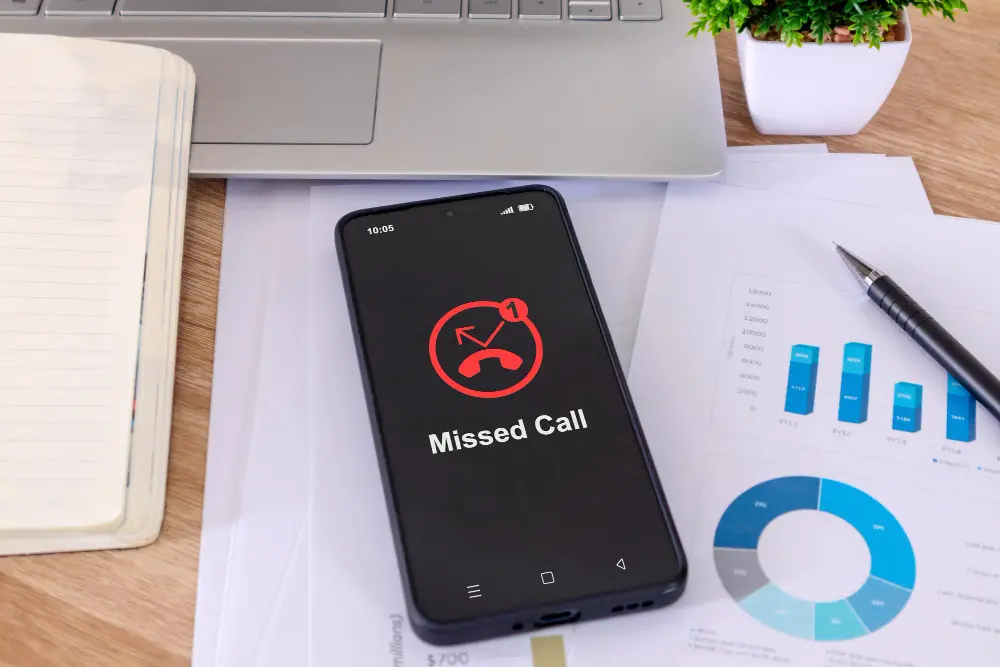
An engaged tone leaves no trace anywhere in your system. It is the only failure where the customer is turned away before they ever reach you.
Black Friday falls on 27 November this year, with Cyber Monday on the 30th. Between now and then most South African businesses will spend real money on advertising, stock, discounting and extra staff.
Almost none of them will test the phones.
That is the odd gap in the funnel. Businesses measure ad spend, conversion rate and basket size, then route every call that campaign generates into a phone setup nobody has looked at since it was installed. You have four weeks, and almost everything here is a configuration change rather than a purchase.
What actually breaks when call volume spikes
You run out of concurrent calls. This is the one almost nobody checks, and it is the worst, because the caller never reaches you at all — they get an engaged tone. Extensions and channels are different things: ten staff do not mean ten simultaneous calls. If your plan allows four and your campaign lands, the fifth caller is simply turned away, and nothing in your reporting will tell you it happened.
Calls go straight to voicemail. If there is no queue, a caller arriving when everyone is busy gets voicemail — and most people do not leave one. They ring the next business on the search results page.
Everything lands on reception. One person answering is fine in November and a disaster on the 27th.
Your trading hours change but your phone system does not. Extended Black Friday hours, Saturday trading, an earlier opening — all of it is governed by time conditions somebody set up once and nobody has revisited.
Nobody is watching. Missed calls are invisible. On the busiest day of your year, that is precisely when you need the number in front of you.
And then December happens. Skeleton staff, people on leave, a shutdown period, and a queue of post-sale queries and returns arriving at the exact moment your team is thinnest.
A four-week plan
Now, four weeks out. Pull last year’s call records for the Black Friday week and look at two things: your busiest hour, and how many calls went unanswered or hit an engaged tone. That gives you a target rather than a guess. Then ask your provider the single most important question — how many simultaneous calls does my account allow? — and compare it with that busiest hour. If it is short, fix it now; capacity changes are usually quick and cheap, but not on the day.
Three weeks out. Put the structure in place. A ring group so calls hit several people rather than one. A queue with position announcements so callers wait instead of hanging up. If you use a menu, shorten it — a six-option auto-attendant is a liability when volume triples.
Two weeks out. Update your time conditions for whatever hours you are actually trading, including the weekend and any late nights. Decide what happens to calls outside those hours, and write the message to match: "we open at eight and return messages the same morning" earns a voicemail in a way "please leave a message" does not.
One week out. Make sure everyone who might need to take a call has a second device — a mobile app or a browser phone — so overflow can reach staff who are not at a desk. Then test it. Ring your own number from outside at the busiest simulated moment and listen to what a customer actually gets.
On the day. Watch the missed-call number in close to real time rather than discovering it in December. If you want that automated, a scheduled pull of call records can flag unanswered calls hourly — we covered how to do that with call data.
If you only do one thing
Check your concurrent call capacity against your busiest hour. Every other failure on this list is visible — you can see a voicemail, you can see a missed call. An engaged tone leaves no trace anywhere in your system, and it is the only failure where the customer is turned away before they ever reach you.
Do not stop at Black Friday
The call pattern does not end on the 27th. The three weeks after it bring delivery queries, returns, warranty questions and complaints — arriving as staff start taking leave. Mid-December to mid-January is when South African businesses are least able to answer and most likely to annoy a customer they just acquired at full advertising cost.
Decide now what happens over the shutdown. Who is on call, which number rings them, what the out-of-hours message says, and when you promise to come back to people. A deliberate answer costs nothing; the default answer costs you the customers you just paid to win.
What good looks like
No caller hears an engaged tone on the 27th. Every call reaches a person or a queue, never voicemail during trading hours. Your trading hours in the phone system match the ones on your website. Somebody is watching the missed-call figure on the day, not in January. And the shutdown period has a defined path that somebody has actually tested.
Frequently asked questions
When is Black Friday 2026 in South Africa?
Friday 27 November 2026, with Cyber Monday following on 30 November. Many South African retailers now run promotions for the whole of November, so call volume often builds well before the day itself.
How many simultaneous calls do I need?
Look at your busiest hour from last year rather than at headcount. A normal office of ten often runs comfortably on four to six concurrent calls, but a sales or support line during a campaign can approach one per seat. Your call records will tell you; your staff count will not.
Why do customers get an engaged tone when my staff are free?
Because concurrent call capacity has been exhausted. It is a separate limit from the number of extensions, and on many plans it is billed separately. Ask your provider what yours is.
Is it too late to change my phone setup before Black Friday?
No. Ring groups, queues and time conditions are configuration changes that take minutes, not a project. Capacity increases are usually quick too — but leave them until the week of, and you are relying on somebody else’s turnaround time.
What should my after-hours message say over the festive season?
Say when you reopen and when you will return the call, not merely that you are closed. A caller who knows they will hear back on the 6th is far more likely to leave a message than one told only that nobody is available.
Do I need to change providers to fix this?
Usually not. Most of this is standard functionality. The questions worth asking your current provider are what your concurrency limit is and whether they can show you your missed-call data — if the answer to either is no, that is a different conversation.
The bottom line
You will spend money driving people to call you. The cheapest possible improvement to that campaign is making sure the calls it generates can actually get through.
Four weeks is plenty of time. Check your concurrency, put a queue in front of the rush, fix your trading hours, give people a second device, and watch the number on the day. If you would like us to pull last year’s figures and tell you what your capacity needs to be, send us your details — it takes us about a day, and it works whether or not you are a customer. If you are missing calls the rest of the year too, start here.